


.png)
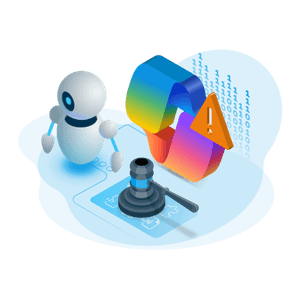








Where ungoverned creation goes wrong
Left to the native create button, a Microsoft 365 tenant grows its fastest-moving assets outside every standard, and the cost lands later:
Anyone can create anything
Any licensed user spins up a Team, a Microsoft 365 group or a site in seconds, with no owner named and no standard applied.
No owner, no accountability
Workspaces launch without a responsible owner, so no one is answerable for their access, the data they hold, or their end of life.
Naming and access drift from day one
Without a template, every new workspace picks its own name, visibility and sharing, and the estate fragments before anyone governs it.
Sprawl starts at creation
Ungoverned Teams, sites and groups are the sprawl you clean up later. The cheapest place to stop it is the moment of creation.

Put self-service inside guardrails
Rencore puts control at the point of creation: people keep self-service, and every workspace arrives with an owner, a name, a sensitivity label and the approvals you require. It complements Microsoft 365 native creation and hands each new workspace to lifecycle governance. For the capability screen by screen, see the provisioning feature and the Rencore app for Microsoft Teams.
Creation starts from a template you control
People request a department, project or community workspace from a gallery you curate, or start from a governed Teams, SharePoint, Planner or Viva Engage template. Content, visibility and the multi-geo location live in the template, so self-service stays inside the rules IT sets.
An owner and a name on every workspace, before it exists
The request captures the owner, a naming standard and the right sensitivity label up front. Nothing is created without someone accountable for it, so orphaned Teams and sites never enter the tenant in the first place.
Approval routes to the people you name
Each template carries its own approvers, deadlines and triggers. A request routes to the right approver before anything is provisioned, so creation stays self-service for the requester and controlled for IT.
Every request tracked, then handed to lifecycle
See every provisioning request, its template, status, requester and time in one place. Each governed workspace passes straight into lifecycle governance, so ownership, access reviews and retirement continue after creation.
What governed provisioning gives you
Each control at creation ladders to a board pillar.
- Guardrails, not gatekeeping Efficiency
People self-serve; IT sets the rules once, in the template.
- Every workspace owned Risk
A named owner and an end of life on every Team, site and group.
- One naming and sharing standard Efficiency
New workspaces follow your naming and visibility from creation.
- Sprawl stopped at the source Cost
Fewer orphaned, duplicate and empty workspaces to clean up later.
Guardrails without gatekeeping: self-service that IT can stand behind.
Rencore complements Microsoft 365. Native creation stays available to your admins; Rencore adds the template, owner, naming and approval controls around it and hands each workspace to lifecycle governance. It does not replace Microsoft.
Trusted by security, IT, and platform leaders
Security, IT, and platform leaders use Rencore to see their Microsoft estate, cut cost and risk, and roll out Copilot and agents on a governed foundation.
-

With Rencore's scalable automation solutions, organizations can not only meet current challenges but also prepare themselves for future technological advancements.
Case Study Philipp Widmer Head of Platform Services Universitätsspital Basel
 -

26% vs 3%
Organizations that govern Microsoft 365 well realize significant Copilot value 26% of the time, versus 3% for those that do not.
Gartner, 2025 Microsoft 365 Copilot Survey -

As we continue to expand our cloud capabilities, the foundation laid by Rencore Governance will undoubtedly play a crucial role in ensuring that each step forward is taken with confidence, security, and compliance in mind.
Case Study Claude Bisdorff Head of IT Systems Ville de Luxembourg
 -

116%
ROI from Microsoft 365 Copilot once the program is adopted and governed, in Forrester’s Total Economic Impact study.
Forrester Total Economic Impact -

I currently estimate that we save around €80k per year by freeing up our IT admin team to do the work that counts.
Case Study Undisclosed Former Lead O365 Competence Center Royal BAM
 -
71%
of enterprises name security and governance among their top challenges to deploying Microsoft 365 Copilot.
Gartner -
Rencore's centralized governance tool excelled at ensuring secure data in Microsoft 365 and minimizing the risk of unauthorized access.
Case Study
-
150,000+
AI agents in use at the average Fortune 500 company by 2028. Agent sprawl is the next sprawl.
Gartner -

With Rencore Governance we are able to reduce manual governance activities, improve our service quality and generate valuable insights across our Microsoft service stack.
Undisclosed Head of AI & Process Automation Wacker Chemie AG


Common questions on this
What is governed self-service provisioning in Microsoft 365?
Does this replace the native Microsoft 365 create experience?
How does governed provisioning stop workspace sprawl?
What can people request, and who approves it?
Related reading
The provisioning capability, the surrounding lifecycle controls, and the sprawl and Copilot problems next door: